
 EN
EN
Selecting the right bottle blowing machine is one of the most consequential decisions a beverage, pharmaceutical, or consumer goods manufacturer can make. The performance, efficiency, and output quality of your production line depend heavily on the type of equipment you invest in. Whether you are scaling up operations, entering the PET packaging market for the first time, or replacing aging equipment, understanding how to evaluate and compare your options is essential before committing your capital.
This guide is designed to help B2B buyers and procurement managers navigate the key factors that differentiate high-performing bottle blowing machine models, understand the specifications that matter most for PET bottle production, and make informed purchasing decisions. From cavity count and output speed to control systems and energy efficiency, every variable explored here is directly relevant to finding the best fit for your production requirements.
Understanding PET Bottle Blowing Technology
How a Bottle Blowing Machine Works
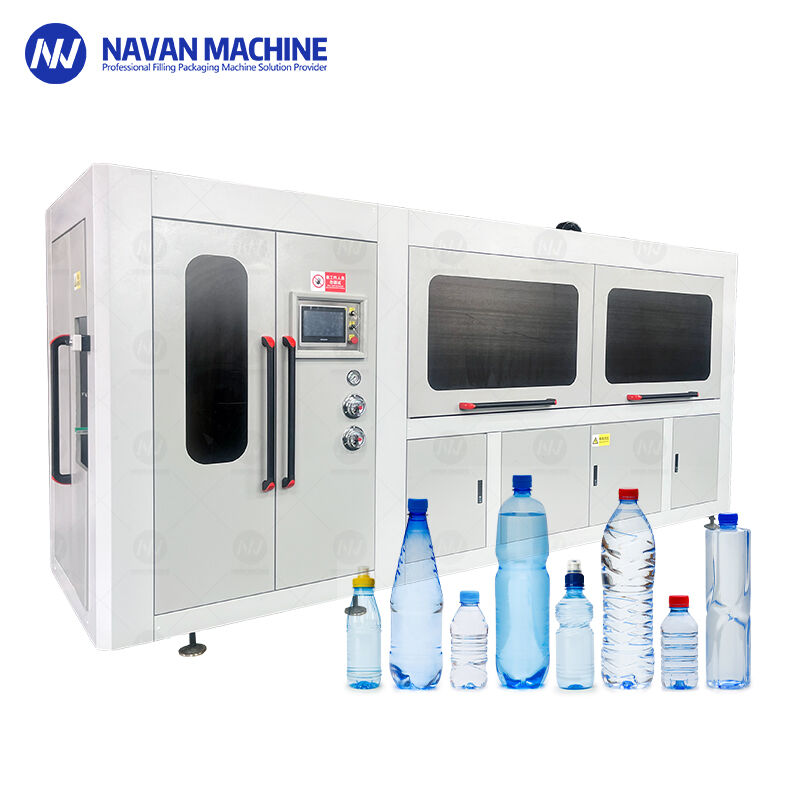
A bottle blowing machine transforms preforms — small, thick-walled PET tubes — into finished bottles through a carefully controlled process of heating, stretching, and blowing. The preform is first heated in an infrared oven until it reaches the ideal softening temperature, after which it is transferred into a mold cavity where high-pressure air inflates it to the exact shape of the mold. This stretch-blow molding process allows manufacturers to produce highly consistent, lightweight PET containers at high volumes.
The quality of the final bottle depends on precise synchronization between the heating zone, the stretching rod, and the blowing pressure. Machines that offer fine-grained control over these three variables consistently produce bottles with better wall thickness distribution, clearer transparency, and stronger structural integrity. When evaluating any bottle blowing machine, the level of process control it offers is a primary indicator of the quality you can expect from your finished product.
Modern stretch-blow systems also incorporate PLC-based automation that allows operators to store and recall production recipes, reducing changeover time and minimizing human error. This is a critical feature for plants that produce multiple bottle sizes or switch between product lines frequently. The sophistication of the PLC and HMI interface is therefore a practical buying criterion, not just a technical footnote.
Key Differences Between Semi-Automatic and Fully Automatic Models
Semi-automatic bottle blowing machine models require an operator to manually insert preforms into the heating zone and remove finished bottles from the mold. These machines are significantly lower in cost and are well-suited for small-batch production, startups, or operations where output volume is under 1,000 bottles per hour. However, labor dependency introduces variability and limits throughput scalability.
Fully automatic models handle everything from preform feeding to bottle ejection without manual intervention. A high-speed automatic bottle blowing machine can achieve outputs ranging from 2,000 to over 24,000 bottles per hour depending on the cavity count and machine configuration. The investment is higher, but the return in labor savings, consistency, and output capacity justifies the cost for medium to large-scale operations.
The decision between semi-automatic and fully automatic is fundamentally a question of production economics. Buyers should calculate their cost per bottle across both scenarios, factoring in labor, downtime, and reject rates. For most industrial buyers targeting commercial PET bottle production at scale, the fully automatic category is the appropriate starting point.
Critical Specifications to Compare When Buying
Cavity Count and Output Capacity
The number of cavities in a bottle blowing machine directly determines how many bottles can be produced per cycle. A 2-cavity machine produces two bottles simultaneously per blow cycle, while a 6-cavity or 8-cavity configuration multiplies throughput accordingly. When comparing machines, output capacity is always expressed as bottles per hour (BPH), and this figure should be verified under realistic operating conditions rather than theoretical maximum values.
Buyers should also consider the relationship between cavity count and bottle size. A 2-cavity machine optimized for 5-liter containers may outperform a 4-cavity machine that struggles with larger mold dimensions. Always match the cavity configuration to your target bottle volume range. For standard 500ml water bottles — one of the most common formats — machines with 4 to 6 cavities offer a strong balance between capital cost and output efficiency.
It is equally important to assess cycle time in seconds per blow cycle, as this metric reveals true machine speed independent of cavity count. A well-engineered bottle blowing machine operating at 1.8 seconds per cycle with 4 cavities will produce approximately 8,000 bottles per hour, which is a meaningful benchmark for mid-scale beverage operations.
Control Systems and Automation Components
The quality and brand of the PLC, servo motors, and pneumatic components inside a bottle blowing machine have a direct impact on long-term reliability and maintenance costs. Machines that use well-recognized industrial-grade components — particularly for PLC controllers and SMC-standard pneumatics — benefit from globally available spare parts, established service networks, and predictable maintenance intervals.
SMC pneumatic components, for example, are widely used in high-quality blow molding equipment because of their reliability in high-cycle, high-pressure environments. When a bottle blowing machine is built with SMC pneumatics and a reputable PLC motor system, buyers gain confidence that the machine will maintain precision performance over millions of production cycles. This is not a minor feature — it is a lifecycle cost consideration that should weigh heavily in procurement decisions.
Buyers should also evaluate whether the HMI (Human-Machine Interface) allows intuitive parameter adjustment for temperature, pressure, and timing. Machines that require specialist technicians to adjust basic parameters introduce unnecessary dependency. A well-designed control system enables in-house operators to optimize production without external support, which reduces both downtime and operational cost.
Evaluating Machine Durability and Build Quality
Frame Construction and Material Standards
The structural rigidity of a bottle blowing machine frame determines how well it maintains dimensional accuracy under continuous high-speed operation. Machines built with heavy-gauge steel frames and precision-machined components are less prone to vibration-induced drift, which directly affects bottle dimensional consistency. In a production environment running 16 to 24 hours per day, frame quality is a durability factor that manifests over months and years of service.
Mold clamping force and alignment precision are also critical. A poorly aligned clamping system introduces flash lines on finished bottles, creates higher reject rates, and accelerates mold wear. Buyers should ask suppliers specifically about clamping force specifications and request documentation on how mold alignment is achieved and maintained. This level of technical due diligence separates informed buyers from those who make decisions based on price alone.
Surface finishing and corrosion protection of internal components also matter, especially in humid production environments. A bottle blowing machine designed for food-grade production should use materials and coatings that meet relevant hygiene standards, preventing contamination risk that could compromise product safety or trigger compliance issues downstream.
Energy Consumption and Operating Efficiency
Energy cost is a significant recurring expense in PET bottle production. The infrared heating system in a bottle blowing machine accounts for the majority of power consumption, so machines that use segmented lamp heating with independent zone control allow operators to reduce energy use by only activating the heating sections required for a given preform size. This feature can reduce energy consumption by 15 to 25 percent compared to non-segmented systems.
Servo-driven systems generally outperform hydraulic and purely pneumatic systems in energy efficiency, offering precise motion control with lower power draw. When evaluating machines with similar output capacities, the kilowatt rating and kWh per 1,000 bottles produced are the most useful efficiency metrics. These figures should be requested from suppliers as part of the technical specification package.
Buyers who are expanding into markets with high electricity costs or sustainability mandates should prioritize energy-efficient configurations from the outset. The upfront premium for a more efficient bottle blowing machine is often recovered within 12 to 24 months through reduced utility costs, making it a financially sound decision at the procurement stage.
Matching the Machine to Your Production Requirements
Bottle Volume Range and Mold Compatibility
Not all bottle blowing machine models support the same range of bottle volumes, and mold compatibility is a crucial factor for buyers who plan to produce multiple SKUs. Machines with adjustable stretching rod lengths and configurable heating zones are capable of handling a broader volume range — typically from 100ml up to 2 liters or beyond — without requiring entirely different equipment.
Mold interchangeability is another specification to scrutinize. Some machines allow fast mold changeovers using standardized mold mounting systems, while others require complex tooling adjustments. For operations producing multiple bottle formats, a machine that supports quick mold changes reduces production downtime and improves line flexibility. This feature is increasingly standard on modern bottle blowing machine models targeting mid to high-volume industrial buyers.
Preform compatibility — specifically neck finish diameter, preform weight, and IV (intrinsic viscosity) of the PET resin — must also be confirmed before purchasing. A machine optimized for a specific preform neck size may require adapters or custom tooling to accommodate different preform standards, which adds cost and complexity to line changeovers.
After-Sales Support and Spare Parts Availability
The long-term value of a bottle blowing machine is significantly shaped by the quality of after-sales support provided by the supplier. Buyers should evaluate lead times for critical spare parts, availability of remote technical support, and whether the supplier can provide on-site commissioning and training services. These factors directly affect how quickly production can be restored following unexpected downtime.
A reputable supplier of a bottle blowing machine will offer a documented spare parts list with recommended stocking levels, a service manual in your operating language, and a clear warranty structure that covers both mechanical and electrical components. Buyers who overlook these post-purchase considerations often encounter costly delays when components fail outside of normal maintenance cycles.
Factory acceptance testing (FAT) before shipment is another practical safeguard. Buyers should insist on FAT documentation that confirms the machine met specified output rates, reject rates, and dimensional tolerances under production conditions using their specific preform and mold. This contractual verification step significantly reduces the risk of commissioning surprises after the machine arrives at your facility.
Making the Final Buying Decision
Total Cost of Ownership vs. Purchase Price
The purchase price of a bottle blowing machine is only one component of its true financial impact. Total cost of ownership (TCO) encompasses energy costs, labor requirements, maintenance and spare parts expenditure, mold costs, and the cost of production losses due to downtime or quality rejects. Buyers who evaluate TCO rather than purchase price alone consistently make better long-term investment decisions.
A machine priced at a lower entry point but requiring frequent component replacements, high energy consumption, or significant manual intervention will routinely cost more over a 5-year operational period than a higher-priced machine with superior build quality and automation. This is a well-understood principle in capital equipment procurement, yet it is frequently overlooked when budget pressure drives decisions.
When building a TCO model for a bottle blowing machine purchase, buyers should use realistic production hours, actual local energy rates, and supplier-provided maintenance schedules. Comparing two or three machines on this basis, rather than on sticker price alone, provides the clearest picture of which investment delivers the best long-term returns.
Supplier Verification and Technical Documentation
Before finalizing any bottle blowing machine purchase, buyers should conduct a thorough verification of the supplier's manufacturing credentials. This includes reviewing CE or relevant certification documentation, inspecting factory audit reports if available, and requesting references from existing customers in similar industries or markets. A credible supplier will welcome this scrutiny and provide documentation proactively.
Technical documentation quality is itself an indicator of supplier professionalism. Complete electrical schematics, pneumatic diagrams, PLC program backups, and operator manuals in the buyer's language are non-negotiable requirements for responsible equipment procurement. A bottle blowing machine without complete technical documentation creates long-term dependency on the original supplier for every service event.
Buyers should also confirm compliance with any relevant import regulations, safety certifications, and local electrical standards before placing an order. Customs delays or compliance failures at the port of entry can push commissioning timelines back by weeks, creating significant financial impact on production startup plans.
FAQ
What is the typical output rate of a high-speed automatic bottle blowing machine for 500ml PET bottles?
A high-speed automatic bottle blowing machine configured for 500ml PET bottles typically achieves between 4,000 and 12,000 bottles per hour depending on the number of cavities and cycle time. Machines with 4 to 6 cavities operating at optimized cycle times are the most common configuration in mid-scale beverage production environments. Always verify output claims under production conditions using your specific preform specifications.
How important is PLC quality when selecting a bottle blowing machine?
PLC quality is highly important because it governs the precision and repeatability of every production cycle. A well-specified PLC allows operators to store production recipes, adjust parameters with precision, and diagnose faults quickly. Machines using industrial-grade PLC systems with SMC pneumatic components deliver more consistent bottle quality and lower long-term maintenance costs compared to machines built with generic control components.
Can a single bottle blowing machine handle multiple bottle sizes?
Yes, many modern bottle blowing machines are designed to support multiple bottle sizes through mold changeovers and adjustable process parameters. However, the range of compatible sizes depends on the machine's maximum stretch rod travel, mold cavity dimensions, and heating zone configuration. Buyers should confirm the full range of compatible bottle volumes with the supplier and understand the changeover time required between different formats.
What certifications should a bottle blowing machine have for international trade?
For most international markets, a bottle blowing machine should carry CE certification indicating compliance with European machinery safety directives, which is widely accepted as a credible quality baseline globally. Buyers should also verify that electrical components comply with local voltage and frequency standards. For food-grade applications, confirmation that materials in contact with the bottle meet relevant food safety regulations is also necessary.
Table of Contents
- Understanding PET Bottle Blowing Technology
- Critical Specifications to Compare When Buying
- Evaluating Machine Durability and Build Quality
- Matching the Machine to Your Production Requirements
- Making the Final Buying Decision
-
FAQ
- What is the typical output rate of a high-speed automatic bottle blowing machine for 500ml PET bottles?
- How important is PLC quality when selecting a bottle blowing machine?
- Can a single bottle blowing machine handle multiple bottle sizes?
- What certifications should a bottle blowing machine have for international trade?