
 EN
EN
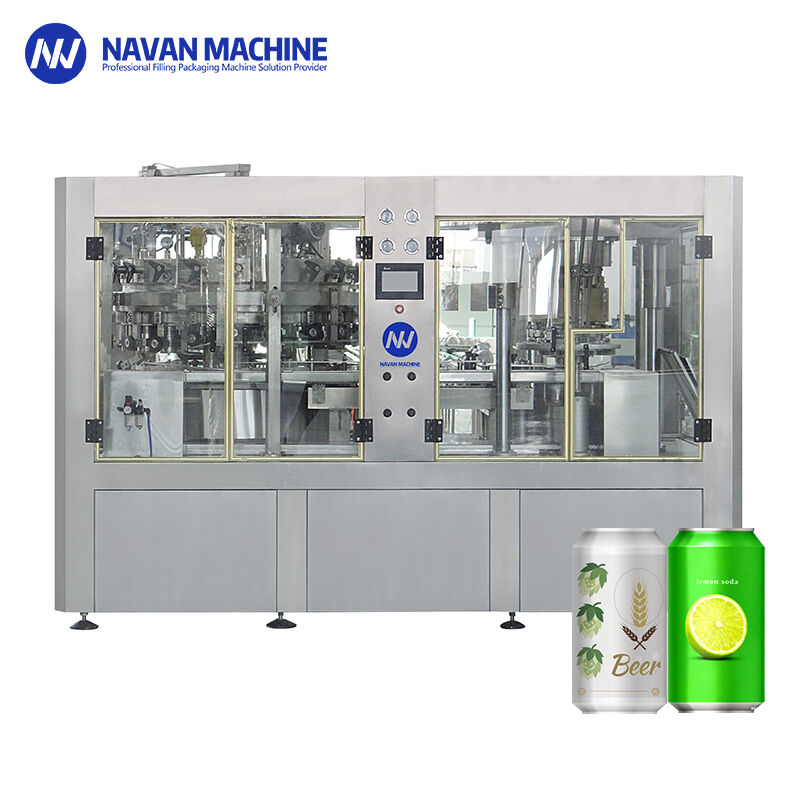
Maintaining stable carbonation throughout the filling process is one of the most technically demanding challenges in beverage production. When carbon dioxide escapes prematurely or unevenly, the result is inconsistent product quality, reduced shelf life, wasted raw materials, and unhappy customers. Whether you are producing sparkling water, carbonated soft drinks, or energy beverages, the performance of your carbonated beverage filling machine directly determines whether every bottle that leaves your line meets its carbonation specification.
Carbonation stability is not an accident — it is the outcome of deliberate engineering, careful process control, and the correct application of filling technology. A well-calibrated carbonated beverage filling machine, operated under the right conditions, can preserve CO2 content from the mixing tank all the way to the sealed bottle. This article walks through the key mechanisms, operating conditions, and best practices that allow beverage producers to achieve consistent, reliable carbonation across every production run.
Understanding Why Carbonation Is Lost During Filling
The Physics of CO2 Escape
Carbon dioxide remains dissolved in liquid primarily because of pressure and temperature. When either variable shifts unfavorably, CO2 molecules begin to migrate out of solution and form bubbles — a process known as nucleation. In an industrial filling environment, nucleation can be triggered by turbulence, temperature fluctuation, pressure drops, or surface agitation inside the filling chamber. Understanding these triggers is the first step toward controlling them effectively in any carbonated beverage filling machine.
The relationship between pressure and CO2 solubility is governed by Henry's Law, which states that the amount of gas dissolved in a liquid is proportional to the partial pressure of that gas above the liquid. In practical filling terms, this means that if the headspace pressure inside the filler bowl drops, carbonation will immediately begin to degas. Producers who understand this principle can design operating parameters that keep the system in equilibrium throughout the fill cycle.
Temperature plays an equally important role. CO2 is significantly more soluble in cold liquid than in warm liquid. A product temperature rise of even two or three degrees Celsius can cause a measurable loss of carbonation before the bottle is sealed. This is why temperature control across the entire filling line — from carbonation tank to fill nozzle — is a non-negotiable requirement for any serious carbonated beverage filling machine operation.
Common Sources of Carbonation Loss in Production Lines
In most production facilities, carbonation loss occurs at several predictable points. The transition from the carbonation tank to the filling bowl is one of the highest-risk zones because pressure differentials can create turbulent flow if transfer lines and valves are not properly sized. Similarly, if the filler bowl is not maintained under consistent counter-pressure, the liquid surface can be exposed to ambient atmosphere momentarily, causing immediate CO2 release.
Fill nozzle design is another critical factor. Nozzles that introduce liquid from above the surface — allowing it to splash or drop — create significant agitation that accelerates CO2 escape. A properly engineered carbonated beverage filling machine uses bottom-up or tangential fill nozzles that guide liquid gently along the inner wall of the bottle, minimizing surface turbulence and preserving dissolved gas content throughout the fill.
Mechanical vibration transmitted through conveyor systems can also induce premature nucleation in partially filled bottles. Even brief exposure to vibration after filling but before capping can reduce final carbonation levels. This is why high-performance filling lines integrate vibration-dampening components and minimize transit distance between filling and capping stations.
Counter-Pressure Filling: The Core Mechanism for Carbonation Stability
How Counter-Pressure Technology Works
Counter-pressure filling is the foundational technology that makes stable carbonation possible in high-speed beverage production. The principle involves pre-pressurizing each bottle with CO2 gas before any liquid is introduced. By matching the pressure inside the bottle to the pressure inside the filling bowl, the carbonated beverage filling machine eliminates the pressure differential that would otherwise cause CO2 to degas as liquid enters the container.
The typical counter-pressure fill cycle consists of several sequential steps: bottle seating, CO2 purge of residual air, pressure equalization between the bottle and the filler bowl, liquid filling under equalized pressure, pressure relief after filling, and finally transfer to the capping station. Each step must be precisely timed and controlled. Any deviation — such as insufficient pre-pressurization or too-rapid pressure relief — will cause measurable carbonation loss in the finished product.
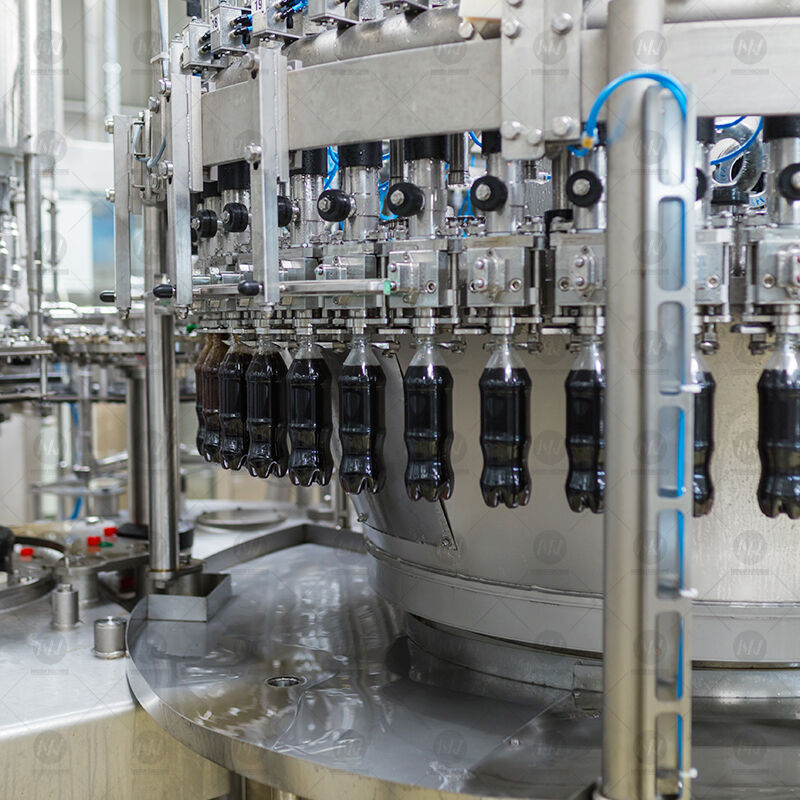
Modern rotary carbonated beverage filling machines execute this cycle repeatedly across dozens of filling valves simultaneously, with each valve independently managed to ensure consistent results. The synchronization of valve timing, bowl pressure regulation, and bottle handling is what distinguishes high-quality filling equipment from lower-grade alternatives. Producers should evaluate not only the speed of a machine but the precision and repeatability of its counter-pressure system when making procurement decisions.
Filler Bowl Pressure Regulation and Its Impact
The filler bowl — the central reservoir from which product is dispensed — must be maintained at a constant, controlled pressure throughout operation. Fluctuations in bowl pressure, even minor ones, propagate through every filling valve and affect the carbonation level in every bottle filled during that period. A reliable carbonated beverage filling machine incorporates pressure control valves and real-time monitoring systems that compensate for demand changes as bottles cycle through the filling carousel.
Pressure setpoints must be established based on the specific product's carbonation volume, fill temperature, and container type. PET bottles, for instance, have different pressure tolerance profiles compared to glass bottles, and the machine parameters must be adjusted accordingly. Operators should document optimal pressure settings for each SKU and apply them consistently at the start of every production run.
It is also important to manage the gas-to-liquid ratio inside the bowl. If the liquid level drops too low, there is more gas space, which can destabilize the pressure equilibrium. If the level is too high, gas management becomes inefficient. Most well-designed carbonated beverage filling machines include liquid level sensors and automatic replenishment controls that maintain the bowl within a defined operating window throughout the production shift.
Temperature Management Across the Filling Line
Pre-Chilling the Product Before Filling
Chilling the beverage before it enters the carbonated beverage filling machine is one of the most effective ways to enhance carbonation retention. Lower product temperatures reduce the vapor pressure of CO2 and increase its solubility, meaning that more gas stays dissolved even when pressure conditions fluctuate slightly. Most carbonated beverage producers target a fill temperature between 0°C and 4°C to maximize CO2 retention during the fill cycle.
Achieving and maintaining this temperature requires adequate refrigeration capacity in the carbonation and holding tanks, as well as insulated transfer lines between the tanks and the filling machine. Any uninsulated section of pipe exposed to ambient temperature will gradually warm the product, reducing carbonation efficiency by the time it reaches the fill valve. This is especially important in warm production environments or during extended production runs where ambient heat accumulates.
Some advanced filling lines incorporate jacketed supply pipes and cooling shrouds around the filler bowl to keep product temperature consistent throughout the shift. While these additions increase capital cost, they significantly reduce product loss from carbonation variation and improve the consistency of finished goods across large production volumes — a clear return on investment for high-throughput operations.
Managing Ambient Conditions Around the Filler
The ambient temperature of the production floor itself affects filling performance. In facilities without climate control, summer temperatures can compromise product temperature management even when upstream refrigeration is adequate. Condensation on cold bottles can also interfere with labeling and capping operations downstream, creating quality defects beyond carbonation loss alone. Producers operating a carbonated beverage filling machine in high-temperature environments should assess whether auxiliary cooling or HVAC improvements are warranted.
Humidity control matters too. High humidity in the filling area can cause moisture accumulation on machine components, which may affect electrical controls and sensor accuracy over time. Scheduled maintenance routines should include inspection of pressure sensors, temperature probes, and valve seals for signs of moisture-related wear, particularly in humid climates where such degradation accelerates.
Proper facility layout planning — such as placing the carbonated beverage filling machine away from heat sources like boilers, steam lines, and direct sunlight — is a low-cost measure that contributes meaningfully to long-term carbonation stability. These environmental factors are often overlooked during machine installation but become apparent as operational challenges within the first few months of production.
Operational Practices That Protect Carbonation Integrity
Proper CIP and Valve Maintenance
Clean-in-place (CIP) procedures are essential for maintaining the hygienic and mechanical integrity of a carbonated beverage filling machine. Residual product, mineral deposits, and microbial contamination inside fill valves or filler bowls can affect flow dynamics, pressure consistency, and ultimately carbonation retention. CIP cycles must be executed according to manufacturer specifications and verified with microbiological and chemical testing to confirm effectiveness.
Valve seals and gaskets are high-wear components in any filling machine that handles pressurized carbonated beverages. A worn seal allows pressure to leak, disrupting the counter-pressure equilibrium that the entire carbonation retention strategy depends upon. Establishing a preventive maintenance schedule for seal replacement — based on cycle counts or operating hours rather than waiting for visible failure — significantly reduces the risk of carbonation loss attributed to mechanical degradation.
Operators should also regularly check nozzle orifice condition. Scored or partially blocked nozzles alter the flow pattern of liquid entering the bottle, introducing turbulence that degrades carbonation even when pressure settings are correct. Nozzle inspection and replacement is a simple but often overlooked step that can have a disproportionate impact on finished product quality in a high-volume carbonated beverage filling machine environment.
Startup and Changeover Procedures
The startup phase of a production run is one of the highest-risk periods for carbonation instability. When a carbonated beverage filling machine is first brought online, the system requires time to stabilize: bowl pressure must reach its target, product temperature must equalize, and CO2 purge cycles must run long enough to displace all residual air from the fill paths. Rushing the startup to maximize output often results in the first several hundred bottles being undercarbonated and needing to be discarded or recycled.
Establishing a documented startup checklist helps operators follow the correct sequence every time, regardless of shift changes or production pressure. Key checkpoints should include bowl pressure verification, product temperature confirmation, CO2 supply pressure check, nozzle flow test, and first-bottle carbonation measurement before full production release. A standardized startup protocol protects product quality and reduces waste from avoidable off-specification output.
During product changeovers, the same discipline applies. Transitioning between products with different carbonation volumes or fill temperatures requires resetting machine parameters carefully. Operators who apply settings from one product run to a different SKU without adjustment will produce inconsistent carbonation levels that may only be detected at the quality control stage — after significant volume has already been filled. Carbonation targets should be treated as a product-specific parameter, stored and recalled systematically for each SKU in the machine's control interface.
FAQ
What is the main cause of carbonation loss in a carbonated beverage filling machine?
The most common cause is pressure differential between the fill bowl and the container being filled. When the bottle is not pre-pressurized with CO2 before liquid entry, the dissolved gas immediately begins escaping. Temperature rise along the filling path and turbulent flow from improperly designed nozzles are also significant contributors to carbonation loss in beverage filling operations.
How does counter-pressure filling help maintain carbonation stability?
Counter-pressure filling works by pre-charging each bottle with CO2 to match the pressure inside the filler bowl before liquid is introduced. This eliminates the pressure drop that causes CO2 to degas. By maintaining pressure equilibrium throughout the fill cycle, a properly configured carbonated beverage filling machine can preserve the full carbonation level from the product tank to the sealed bottle.
What temperature should carbonated beverages be filled at to minimize carbonation loss?
Most beverage producers fill carbonated products at temperatures between 0°C and 4°C. At these temperatures, CO2 solubility is high, meaning the gas remains dissolved in the liquid even when minor pressure fluctuations occur during the fill process. Filling at higher temperatures significantly increases the risk of CO2 escape and inconsistent carbonation in the finished product.
How often should fill valves and seals be inspected on a carbonated beverage filling machine?
Fill valve seals and gaskets should be inspected on a schedule based on operating hours or fill cycle counts rather than waiting for visible failure signs. Most equipment manufacturers provide recommended replacement intervals in the maintenance documentation. Proactive seal replacement prevents pressure leaks that directly undermine the counter-pressure system, and regular nozzle inspection should accompany this routine to ensure consistent, low-turbulence liquid flow during every production run.
Table of Contents
- Understanding Why Carbonation Is Lost During Filling
- Counter-Pressure Filling: The Core Mechanism for Carbonation Stability
- Temperature Management Across the Filling Line
- Operational Practices That Protect Carbonation Integrity
-
FAQ
- What is the main cause of carbonation loss in a carbonated beverage filling machine?
- How does counter-pressure filling help maintain carbonation stability?
- What temperature should carbonated beverages be filled at to minimize carbonation loss?
- How often should fill valves and seals be inspected on a carbonated beverage filling machine?