 EN
EN
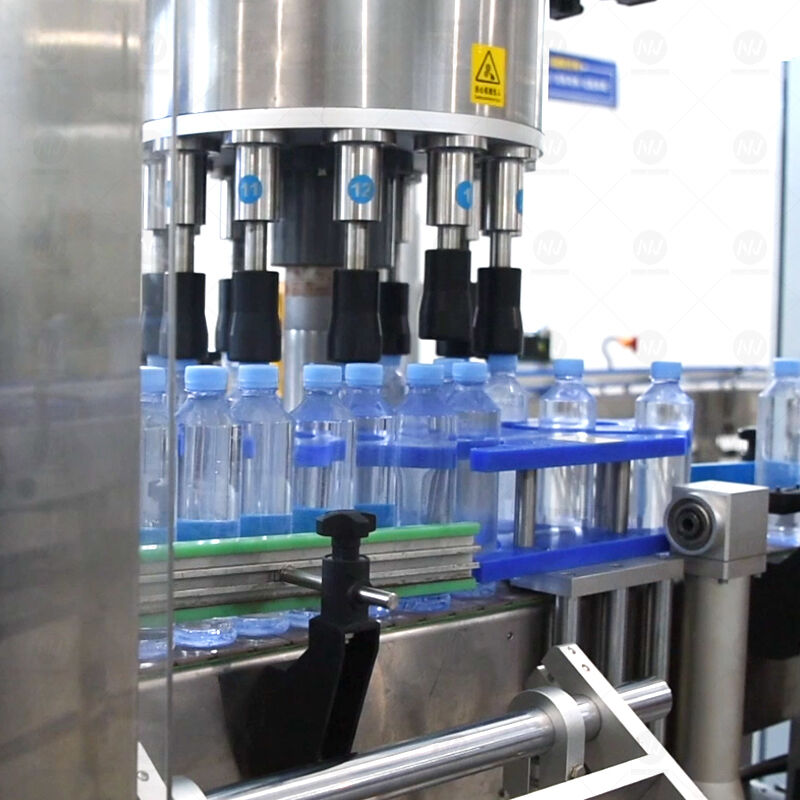
In today's competitive beverage manufacturing environment, maximizing the efficiency of every production stage is no longer optional—it is a business imperative. A modern beverage filling line must deliver consistent output, minimize waste, and adapt rapidly to changing product formats and volumes. Smart control systems have emerged as the critical technology layer that makes all of this possible, transforming what was once a mechanically driven process into a data-informed, self-correcting production ecosystem.
Understanding how smart control systems interact with a beverage filling line requires a look at both the hardware and software dimensions of modern automation. From programmable logic controllers and human-machine interfaces to advanced sensor networks and cloud-connected analytics platforms, each component plays a defined role in ensuring that filling operations run at peak accuracy, speed, and reliability. This article explores the specific mechanisms through which intelligent control technology elevates beverage filling line performance and why manufacturers who adopt these systems gain a measurable operational advantage.
The Role of Automation Intelligence in Beverage Filling Line Operations
From Mechanical Control to Smart System Architecture
Traditional beverage filling lines relied heavily on manual adjustments, fixed-speed motors, and basic relay-based control logic. While these configurations were serviceable in low-complexity environments, they left significant performance potential unrealized. Smart control systems replace this static architecture with dynamic, programmable frameworks that can respond in real time to process variables such as fill volume deviation, container positioning error, and conveyor speed fluctuation.
The backbone of a modern smart beverage filling line is typically a programmable logic controller, or PLC, paired with a supervisory control and data acquisition system, commonly known as SCADA. These systems communicate continuously with sensors, actuators, and servo drives distributed throughout the line, creating a closed-loop control environment that automatically corrects deviations before they escalate into waste or downtime events.
This architectural shift from reactive to proactive control is what fundamentally distinguishes smart systems from their conventional counterparts. Rather than waiting for an operator to detect and address an issue, the intelligent control layer identifies anomalies, applies corrective logic, and logs the event for later analysis—all within milliseconds.
Human-Machine Interface as the Operator's Command Center
The human-machine interface, or HMI, is the primary touchpoint between the operator and the beverage filling line's control architecture. Modern HMI panels present real-time data in intuitive visual formats, allowing operators to monitor fill levels, line speed, reject rates, and machine status at a glance. This transparency reduces the cognitive load on production staff and supports faster decision-making during shift operations.
Advanced HMI systems also support recipe management, enabling operators to switch product formats quickly by loading pre-configured parameter sets. On a high-speed beverage filling line, where changeovers between bottle sizes or liquid viscosities can consume significant time, recipe-driven automation dramatically reduces setup duration and the risk of human error during parameter entry.
Furthermore, role-based access controls within HMI platforms ensure that only qualified personnel can modify critical parameters, while supervisors can review historical trends and performance logs remotely. This layered access model improves both safety and accountability across the production floor.
Precision Fill Control and Volume Accuracy Optimization
Sensor-Driven Fill Level Management
One of the most direct ways that smart control systems optimize a beverage filling line is through precision fill volume management. Traditional volumetric fillers relied on mechanical flow controls that were susceptible to drift caused by temperature changes, pressure fluctuations, or ingredient viscosity variation. Smart systems integrate flow meters, level sensors, and pressure transducers that feed real-time data to the control system, enabling dynamic compensation for these variables.
For carbonated beverages, maintaining the correct counter-pressure during filling is essential to prevent foaming and product loss. Smart control systems monitor and adjust counter-pressure levels continuously, ensuring that each bottle on the beverage filling line is filled to the precise specification without overfill waste or underfill quality failures. This level of control directly improves both yield rates and regulatory compliance.
The data generated by fill sensors is also invaluable for statistical process control. By analyzing fill weight or volume distributions across large batch samples, production managers can detect gradual equipment wear or seal degradation long before it reaches a critical failure threshold, enabling planned maintenance rather than emergency repairs.
Servo-Driven Nozzle and Valve Actuation
Servo motor technology has replaced pneumatic actuation in many high-performance beverage filling line configurations because it offers programmable speed and position control that pneumatic systems cannot match. Each filling nozzle driven by a servo actuator can be individually programmed for insertion depth, flow rate ramp-up, and retraction timing, minimizing drip, splashing, and foam formation.
Smart control systems coordinate these servo axes through synchronized motion profiles that are linked to container indexing signals. As each container arrives at the fill station, the control system confirms its presence and orientation using vision sensors before initiating the fill cycle. This container-confirmation logic eliminates fill-without-container events, which are a common source of product waste and line contamination on less sophisticated equipment.
For manufacturers operating a multi-format beverage filling line, servo-driven actuation simplifies the changeover process significantly. Adjusting fill depth, nozzle spacing, and cycle timing for a new container format requires only a parameter update in the control system, not a physical tool change, reducing changeover time from hours to minutes in many installations.
Real-Time Monitoring and Predictive Maintenance Integration
Continuous Data Collection Across the Filling Line
Smart control systems transform a beverage filling line into a data-generating asset rather than a purely mechanical one. Vibration sensors on motors, temperature sensors on bearings, torque monitoring on capping heads, and flow data from filling valves all stream continuously into the control and analytics infrastructure. This data richness creates the foundation for genuine predictive maintenance rather than the calendar-based or reactive approaches that characterize older operations.
Predictive maintenance algorithms analyze equipment performance trends over time to identify signatures associated with impending failures. On a high-throughput beverage filling line, an unexpected equipment failure during a production run can result in thousands of rejected containers, product spoilage, and costly unplanned downtime. Predictive alerts allow maintenance teams to schedule interventions during planned stops, preserving both throughput and product quality.
The integration of condition monitoring with the maintenance management system also creates a closed-loop improvement cycle. When a predicted failure event is prevented through timely intervention, the outcome is logged and used to refine the predictive model, making it progressively more accurate over time as the system learns the specific aging behavior of the installed equipment.
Remote Diagnostics and Cloud Connectivity
Cloud-connected smart control architectures enable remote diagnostics, which is particularly valuable for manufacturers operating multiple facilities or for those relying on equipment suppliers for technical support. Engineers can access live or historical data from the beverage filling line without being physically present on the production floor, accelerating root cause analysis and reducing the mean time to resolve performance issues.
Remote connectivity also supports software updates and parameter optimizations that can be deployed centrally and pushed to multiple lines simultaneously. This capability ensures that performance improvements discovered on one beverage filling line installation can be rapidly propagated across the entire production network, compounding the operational benefit at scale.
Data security is a legitimate concern in cloud-connected industrial environments, and modern systems address this through encrypted communications, virtual private network access controls, and role-based authentication. These safeguards allow manufacturers to capture the efficiency benefits of remote connectivity without exposing their operational data to unauthorized access.
Changeover Efficiency and Multi-Product Flexibility
Automated Format Change and Recipe Management
Consumer demand for product variety has placed increasing pressure on manufacturers to run multiple SKUs on a single beverage filling line with minimal transition time. Smart control systems address this challenge through comprehensive recipe management that stores all format-specific parameters—fill volume, nozzle configuration, conveyor speed, label positioning, and capping torque—as a single selectable profile.
When an operator initiates a product changeover, the smart system sequences the mechanical adjustments, verifying at each stage that the correct configuration has been achieved before advancing. This guided changeover logic eliminates the variability introduced by manual adjustments and ensures that the beverage filling line is qualified and ready to produce compliant product at the end of the changeover, not just mechanically set up.
The business impact of efficient changeovers on a beverage filling line is substantial. Reducing a two-hour changeover to thirty minutes on a line running four product variants per day can recover more than five hours of productive capacity per week—output that translates directly to revenue and customer service capacity without any capital investment in additional machinery.
Quality Verification and Inline Inspection Integration
Smart control systems on a beverage filling line do not operate in isolation—they integrate with inline quality inspection technologies to create a unified quality assurance architecture. Vision systems verify label placement, cap application, and fill level. Weight checkweighers confirm that each container meets the specified fill tolerance. Leak detectors identify improperly sealed containers before they leave the production area.
When an inspection system identifies a non-conforming container, the smart control layer triggers an automatic reject mechanism that diverts the defective unit without stopping the line or requiring operator intervention. The rejection event is logged with the associated quality parameter that triggered it, creating a traceable quality record for each production batch.
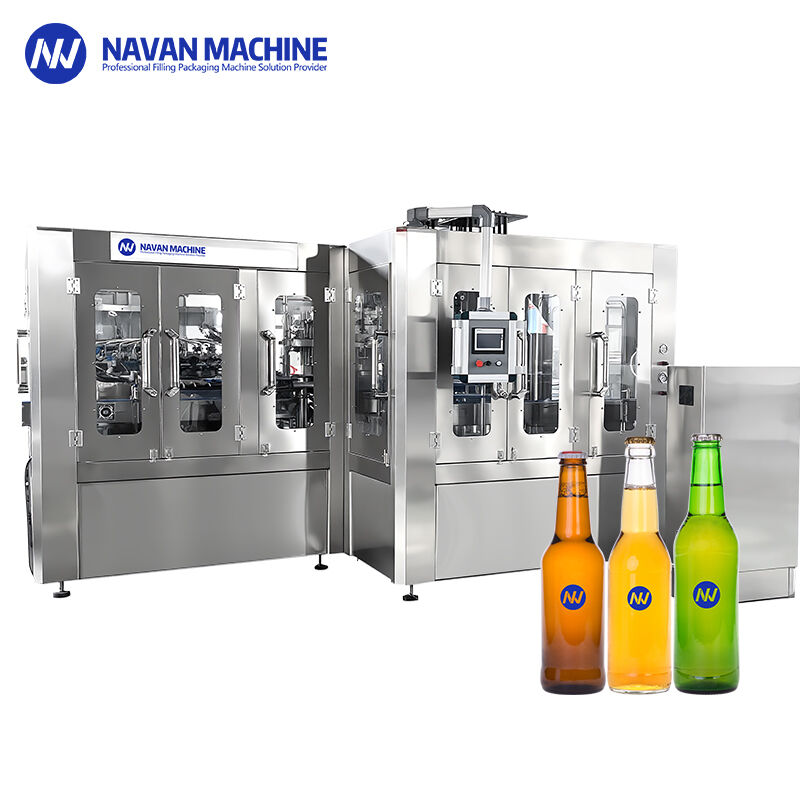
This closed-loop quality architecture means that the beverage filling line is not merely producing at high speed—it is producing at high accuracy. The combination of smart fill control and integrated inspection reduces consumer complaints, minimizes product recalls, and supports the documentation requirements of food safety certification programs such as HACCP and FSSC 22000. For a comprehensive solution that integrates these capabilities, consider a beverage filling line purpose-built with advanced smart control functionality from the ground up.
Overall Equipment Effectiveness and Performance Benchmarking
OEE as the Primary Performance Metric
Overall Equipment Effectiveness, or OEE, is the standard metric used to quantify the combined impact of availability, performance rate, and quality rate on a beverage filling line. Smart control systems make OEE measurement automatic and continuous rather than a periodic manual calculation. Every production event—planned stop, unplanned stop, speed loss, and quality rejection—is timestamped and categorized by the control system, creating a precise and unambiguous performance record.
Real-time OEE dashboards give production managers immediate visibility into where losses are occurring on the beverage filling line during a shift, enabling targeted interventions before the end of the production run. This stands in sharp contrast to environments where OEE data is compiled only at the end of the week, by which time the conditions that caused the losses may have changed or been forgotten.
Benchmarking OEE data across shifts, crews, product types, or facilities also reveals systemic improvement opportunities that would be invisible without the data infrastructure that smart control systems provide. A beverage filling line consistently performing at 65% OEE on one product but 85% on another signals a format-specific issue worth investigating rather than a general equipment problem.
Continuous Improvement Through Data-Driven Insights
The accumulated operational data generated by a smart-controlled beverage filling line becomes an organizational asset that fuels continuous improvement cycles. Process engineers can use this data to correlate filling accuracy with upstream ingredient temperature, to evaluate the effect of different conveyor speed profiles on container handling, or to quantify the actual output impact of different maintenance interventions.
This evidence-based approach to improvement is fundamentally more powerful than intuition-driven process adjustments. When an engineering team proposes a parameter change to improve the performance of a beverage filling line, the smart control system's data infrastructure allows the change to be evaluated objectively against a pre-change baseline, removing ambiguity from the improvement validation process.
Over time, manufacturers who systematically exploit the data output of their smart control systems build a proprietary process knowledge base that is difficult for competitors to replicate. This institutional knowledge compounds in value as it enables faster qualification of new products, more accurate capacity planning, and a continuously improving cost-per-unit profile on the beverage filling line.
FAQ
What types of beverages are best suited for a smart-controlled filling line?
Smart control systems offer performance advantages across virtually all beverage categories, including carbonated drinks, still water, juices, dairy-based drinks, alcoholic beverages, and functional drinks. The specific sensors, valve technologies, and process parameters configured within the control system are adapted to the physical characteristics of the product, such as carbonation level, viscosity, and sensitivity to temperature or shear. A well-configured beverage filling line with smart controls can be adapted to handle multiple product categories on the same physical equipment through recipe-driven changeovers.
How long does it typically take to see a return on investment from smart control upgrades?
The return on investment timeline for smart control upgrades on a beverage filling line varies based on production volume, current OEE baseline, and the scope of the upgrade. In many industrial cases, the combination of reduced waste, faster changeovers, lower unplanned downtime, and improved quality yields a payback period in the range of one to three years. High-volume operations with frequent changeovers or significant current waste levels typically see the fastest returns.
Can existing beverage filling equipment be retrofitted with smart control systems?
Yes, retrofitting is a practical option for many existing beverage filling line installations. Modern control hardware is designed with modular architectures and standardized communication protocols such as OPC-UA and Profinet that facilitate integration with legacy mechanical equipment. A phased retrofit approach—starting with high-impact areas such as fill control and reject handling—allows manufacturers to capture performance gains incrementally without replacing entire line sections. The viability and cost of retrofitting depend on the age and architecture of the existing equipment, which typically requires an assessment by a qualified automation engineer.
How do smart control systems handle line stoppages to protect product quality?
When a beverage filling line experiences a stoppage, the smart control system follows a pre-programmed response protocol designed to protect both the product and the equipment. For beverages sensitive to temperature or oxidation, the system may activate purging cycles or maintain inert atmosphere conditions at fill heads during the stop period. The duration of the stoppage is monitored, and if it exceeds a configurable threshold, the system can flag product filled just before or after the event for additional inspection or hold for quality review, ensuring that production resumes only when all conditions are verified as acceptable.
Table of Contents
- The Role of Automation Intelligence in Beverage Filling Line Operations
- Precision Fill Control and Volume Accuracy Optimization
- Real-Time Monitoring and Predictive Maintenance Integration
- Changeover Efficiency and Multi-Product Flexibility
- Overall Equipment Effectiveness and Performance Benchmarking
-
FAQ
- What types of beverages are best suited for a smart-controlled filling line?
- How long does it typically take to see a return on investment from smart control upgrades?
- Can existing beverage filling equipment be retrofitted with smart control systems?
- How do smart control systems handle line stoppages to protect product quality?