 EN
EN
Selecting the right beverage filling machine is one of the most consequential decisions a production manager or plant owner can make. The equipment you choose will directly influence your output quality, operational efficiency, product safety, and long-term profitability. With dozens of machine types, configurations, and capability tiers available on the market, narrowing down the best option requires a structured, criteria-driven approach rather than simply choosing based on price or brand familiarity.
This article breaks down the essential factors every buyer, production engineer, or operations director should evaluate before investing in a beverage filling machine. Whether you are setting up a new production line, scaling an existing one, or upgrading aging equipment, understanding these criteria will help you make a more confident and technically sound purchasing decision. The guidance here is applicable across juice, water, carbonated drinks, dairy beverages, teas, energy drinks, and other liquid product categories.
Understanding Your Production Requirements First
Output Volume and Throughput Targets
The starting point for any beverage filling machine selection process is a clear understanding of your target production volume. Throughput is typically measured in bottles per hour (BPH) or containers per minute, and machines are engineered to operate optimally within specific speed ranges. Choosing a machine that is significantly underpowered for your volume targets will create bottlenecks, while selecting an overpowered machine wastes capital and increases operating costs unnecessarily.
You should also factor in planned growth when calculating throughput requirements. If your facility expects a 30% increase in production volume over the next three years, it is strategically wise to invest in a beverage filling machine with sufficient scalability rather than buying exactly to today's needs. Many advanced machines offer modular expandability that allows output capacity to increase without a full equipment replacement.
Peak demand periods also matter. A beverage filling machine must be capable of sustaining its rated output during peak operational hours without compromising filling accuracy or increasing downtime risk. Always verify sustained throughput data, not just peak capacity claims, when evaluating equipment specifications.
Beverage Type and Product Characteristics
Not every beverage filling machine is suitable for every type of beverage. The physical and chemical properties of your product — including viscosity, carbonation level, temperature sensitivity, particulate content, and pH — all influence machine design requirements. Carbonated soft drinks require counter-pressure filling systems that prevent CO2 loss and foaming, whereas still water or juice can typically be filled using gravity or volumetric filling methods.
High-viscosity beverages such as smoothies, protein shakes, or pulp-heavy juices require machines with wider valve openings and specially designed filling heads that can handle thick or chunky liquids without blockage. Dairy-based beverages often demand hot-fill or aseptic filling configurations to maintain product sterility throughout the process. Matching the beverage filling machine to your specific product type is non-negotiable for both quality assurance and regulatory compliance.
Temperature-sensitive beverages also require machines capable of maintaining precise thermal conditions during the fill cycle. Misalignment between product requirements and machine capabilities leads to elevated spoilage rates, increased waste, and potential food safety violations — all of which carry significant financial and reputational consequences.
Container Compatibility and Format Flexibility
Bottle and Container Types
A critical dimension of beverage filling machine selection is determining which container formats the equipment can handle. Modern beverage packaging spans PET bottles, glass bottles, aluminum cans, cartons, pouches, and HDPE containers. Each format places unique mechanical demands on the filling equipment, from how containers are conveyed and held during filling to how they are sealed or capped afterward.
Many producers work with multiple container sizes or shapes within the same production environment. In these cases, a beverage filling machine with quick-changeover capabilities becomes enormously valuable. Format flexibility reduces the time and labor required to switch production runs between different packaging sizes, which is especially important for contract manufacturers or co-packers who serve multiple clients with varying packaging specifications.
Confirm that the machine's mechanical grippers, star wheels, conveyor guides, and filling heads are either universally adjustable or available with conversion kits that cover your full range of container dimensions. The cost of a flexible beverage filling machine is often offset by the reduced downtime associated with changeovers and the ability to serve broader market segments without additional capital investment.
Fill Volume Accuracy and Range
Fill accuracy is a legally and commercially significant performance metric for any beverage filling machine. Underfilling exposes you to regulatory penalties and consumer complaints, while consistent overfilling directly erodes margins at scale. Modern high-performance machines are capable of fill accuracy tolerances as tight as ±0.5%, which is critical for high-volume operations where even small deviations accumulate rapidly into meaningful losses.
The fill volume range supported by the machine must also encompass all your current and planned container sizes. A machine designed primarily for 500ml containers may not deliver accurate fills for 100ml or 1500ml containers without significant calibration challenges. Always specify your full fill range when requesting technical proposals, and ask for validation data demonstrating accuracy at both the minimum and maximum fill volumes in your product lineup.
Automation Level and Integration Capability
Fully Automatic vs. Semi-Automatic Systems
The degree of automation embedded in a beverage filling machine has a direct impact on labor requirements, throughput consistency, and long-term operational costs. Semi-automatic machines require operators to perform key steps such as container placement, cap feeding, or label application, which introduces human variability and limits sustained output speeds. They are generally better suited for small-scale or artisanal producers with lower volume requirements and tighter capital budgets.
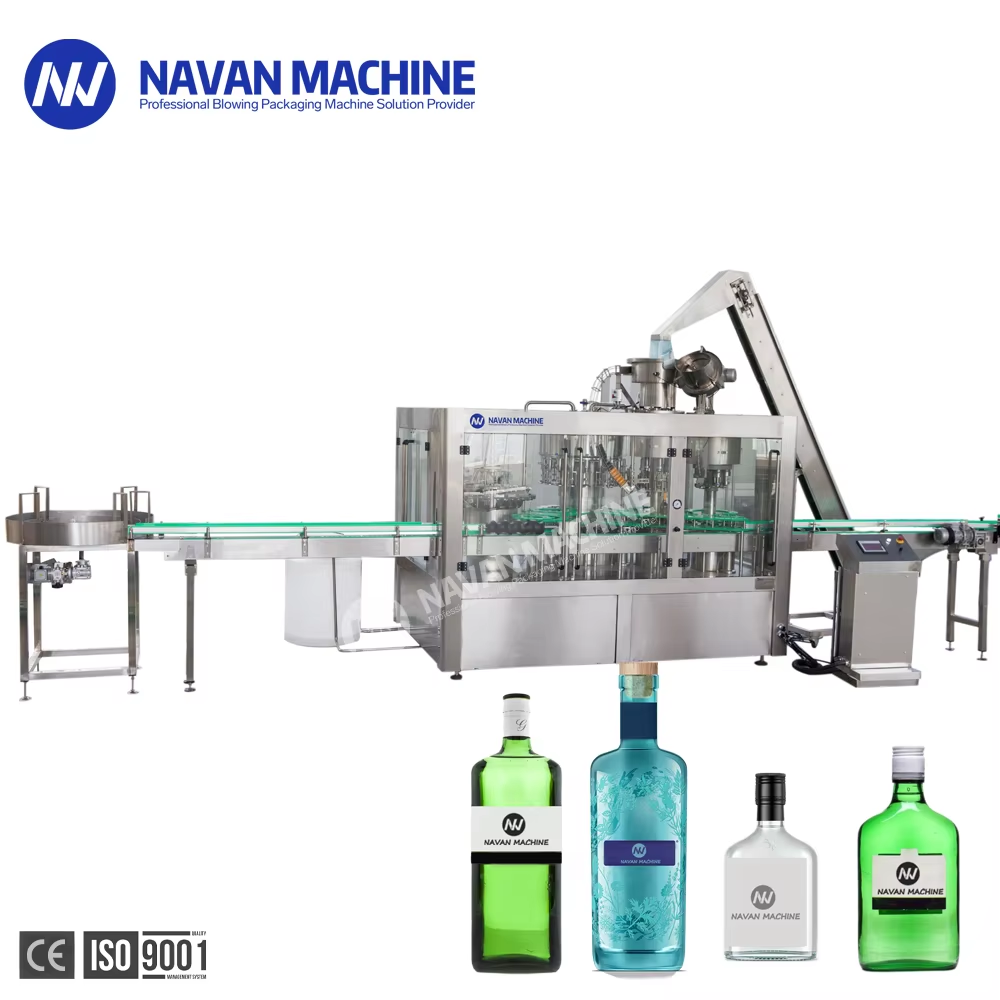
Fully automatic beverage filling machine systems handle the complete filling process — from container infeed and rinsing through filling, capping, and labeling — with minimal human intervention. This level of automation is essential for mid-to-large scale production environments where consistency, speed, and hygienic integrity are paramount. The reduced dependency on manual labor also lowers the risk of contamination and operator-related errors that could compromise product safety.
When evaluating automation level, consider not only the immediate operational benefits but also the long-term return on investment. Fully automated systems typically carry a higher upfront cost but deliver measurable savings through reduced labor costs, lower waste rates, and higher overall equipment effectiveness (OEE) over the machine's operational lifespan.
PLC Controls and Production Line Integration
Modern industrial beverage filling machine systems are typically governed by programmable logic controllers (PLCs) that enable precise recipe management, real-time production monitoring, and fault diagnostics. A robust PLC system allows operators to store multiple product and container recipes, switch between them quickly, and track performance data continuously — all of which contribute to tighter operational control and reduced downtime.
Integration capability is equally important in multi-machine production environments. A beverage filling machine that communicates seamlessly with upstream rinsers, downstream cappers, labelers, and case packers creates a synchronized production line that operates at maximum efficiency. Look for machines that support standard industrial communication protocols and are compatible with your existing SCADA or MES infrastructure if applicable.
Data logging and remote monitoring capabilities are increasingly expected features in a modern beverage filling machine. These functions allow production managers to track fill accuracy, cycle times, fault frequencies, and maintenance indicators without requiring constant physical presence on the production floor, enabling more proactive management of equipment health and performance.
Hygiene Standards, Compliance, and Cleanability
Material Standards and Sanitary Design
For any food or beverage application, the beverage filling machine must comply with relevant food safety regulations and hygienic engineering standards. All product contact surfaces should be constructed from food-grade stainless steel — typically 316L grade — which offers superior corrosion resistance and is compatible with CIP (clean-in-place) and SIP (sterilize-in-place) cleaning systems. Avoid machines where product pathways incorporate materials that are difficult to clean, prone to corrosion, or not rated for food contact applications.
Hygienic design principles — including smooth internal surfaces, elimination of dead zones where liquid can accumulate, and fully drainable piping — are essential attributes of a properly engineered beverage filling machine. Machines that adhere to EHEDG or 3-A Sanitary Standards offer verified design criteria that minimize contamination risks. These standards are particularly critical for dairy, juice, and other perishable beverage categories where microbial safety is paramount.
Seals, gaskets, and valve materials should also be evaluated for compatibility with your cleaning chemicals and the beverages being filled. Using incorrect seal materials can lead to premature degradation, contamination of product, and unplanned maintenance downtime — all of which are avoidable with proper specification at the purchasing stage.
CIP Systems and Maintenance Accessibility
Integrated CIP capability is a major operational advantage in a beverage filling machine, as it allows thorough internal cleaning without disassembling product pathways. This reduces cleaning time significantly and enables more frequent sanitation cycles, which is especially important in high-throughput environments where production runs are long and changeover windows are short. A well-designed CIP system should be capable of achieving validated cleanliness levels in compliance with your food safety plan.
Ease of external maintenance access is another practical consideration that is often underweighted during equipment selection. A beverage filling machine that requires special tools or extensive disassembly to access key maintenance points will drive up preventive maintenance time and increase the risk of deferred servicing. Inspect machine designs for accessible inspection panels, clearly labeled lubrication points, and component layouts that allow technicians to work efficiently during scheduled maintenance intervals.
Supplier Support, Total Cost of Ownership, and Scalability
After-Sales Service and Spare Parts Availability
The performance of a beverage filling machine over its operational life is as much a function of supplier support quality as it is of the machine's mechanical design. When evaluating suppliers, assess their technical support infrastructure: Do they offer remote diagnostics? What is the average response time for on-site service calls? Are trained technicians available in your geographic region? These questions matter significantly when production downtime costs thousands of dollars per hour.
Spare parts availability and lead times should also be factored into supplier selection. A beverage filling machine that relies on long-lead imported components for even routine wear parts creates unacceptable operational risk. Confirm that the supplier maintains a readily accessible spare parts inventory and can provide critical components within timelines that align with your maintenance strategy and production continuity requirements.
Request references from existing customers operating in similar production environments and ask specifically about their experience with after-sales support and parts availability. Real-world service performance is often the most reliable predictor of what you can expect after your own beverage filling machine is installed and running.
Total Cost of Ownership and Future Scalability
Purchase price is only one component of the true cost of a beverage filling machine. Total cost of ownership (TCO) encompasses energy consumption, water usage for cleaning, labor requirements, maintenance frequency and cost, spare parts expenditure, and the financial impact of unplanned downtime. A machine with a lower initial price tag but high energy consumption, frequent breakdowns, or expensive proprietary components may ultimately prove far more costly than a higher-priced alternative with superior reliability and lower operating costs.
Scalability is a forward-looking dimension of TCO that sophisticated buyers increasingly prioritize. A beverage filling machine designed to accept additional filling heads, integrate new container formats, or accommodate upgraded PLC systems without full replacement offers a compounding return on investment as your business grows. Evaluating scalability at the point of purchase protects you against the disruptive and expensive cycle of replacing equipment every few years simply because your production needs have evolved.
Conducting a thorough TCO analysis across your shortlisted machines — using realistic assumptions about production volumes, energy costs, maintenance needs, and growth projections — will often reveal that the most strategically sound beverage filling machine investment is not necessarily the cheapest one available at the time of purchase.
FAQ
What filling technology is best suited for carbonated beverages?
Carbonated beverages require counter-pressure filling technology, which maintains an equal or higher pressure in the bottle than in the liquid supply tank during the fill cycle. This prevents CO2 from escaping prematurely, minimizing foaming and ensuring accurate fill volumes. A standard gravity or volumetric beverage filling machine is not appropriate for carbonated products and would result in significant product waste and quality issues.
How do I determine the right level of automation for my production line?
The appropriate automation level depends on your target throughput, available labor, budget, and quality consistency requirements. Small-scale producers with volumes under 1,000 BPH may find semi-automatic systems economically viable, while operations targeting 5,000 BPH and above typically require fully automatic beverage filling machine configurations to achieve the required speed and consistency. Consider your projected growth trajectory as well, since scaling a semi-automatic line often requires complete replacement rather than incremental upgrades.
What hygiene certifications should I look for in a beverage filling machine?
Key hygiene certifications and standards to look for include compliance with EHEDG (European Hygienic Engineering and Design Group) guidelines, 3-A Sanitary Standards, and FDA food contact material regulations for the relevant markets. CE marking is important for equipment used in European markets. A reputable beverage filling machine supplier should be able to provide documentation confirming that their equipment meets the food safety standards applicable to your target distribution regions.
How important is fill accuracy for a beverage filling machine?
Fill accuracy is critically important from both a regulatory compliance and a commercial profitability standpoint. Most regulatory frameworks specify minimum fill tolerances that producers must meet to avoid penalties and product recalls. From a profitability perspective, consistent overfilling on a high-volume beverage filling machine can translate into substantial product giveaway costs over a full production year. Prioritizing fill accuracy as a core specification criterion when selecting equipment protects both your compliance standing and your margin performance.